What's Next?
Birding, birding, and more birding!

As the school semester comes close to an end and spring is just beginning, I have just started to see bird activity pick up in my yard and around my neighborhood. Today, my fiancé and I spent time birding at Pointe Mouillee, where we were excited to see a flock of thirteen American White Pelicans fly overhead! Throughout the semester I have enjoyed watching birds in my yard, more routinely, as I made sure the feeder was filled at all times to attract whatever species I could.
To me, the most important aspect of this blog and project for me was just the ability to provide a reliable feeding station for birds in my area. This encourages birds to nest nearby as they are able to use the feeders as an alternative food source. By providing additional resources, such as water and shelter, I would likely have a greater selection of birds who visit my feeder. Feeding birds is something I did before starting this blog and it is something I will continue to do, but I would like to expand on doing so. Currently, I do not have any bird nesting boxes placed in my yard; although I do have an insect hotel! My plans for this spring are to officially place a bluebird box in the field by my yard. This area is located next to a wooded area that borders a creek, creating a perfect place for Eastern bluebirds to be able to perch within the tree line, and swoop over the field to catch bugs, while being close to a water source.
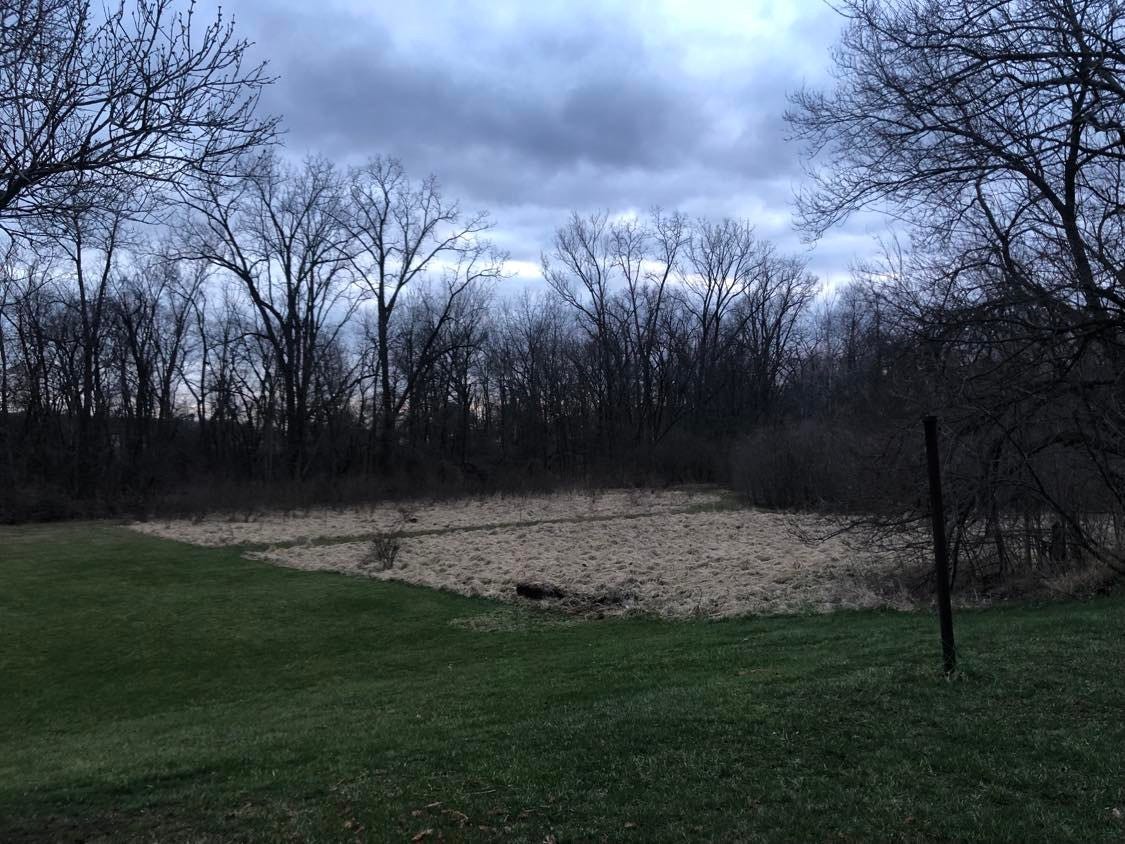
This is a photo of the field in my yard currently. During the spring and summer, this area usually grows knee high grass and brush. Last spring I spotted one Eastern bluebird from my kitchen window as it flew out of the field and into the woods.
After this project, and semester, I will continue to study and enjoy native birds in my area. I am looking forward to the second week of May for The Biggest Week In American Birding event that takes place in north-west Ohio. This event is put on by Black Swamp Bird Observatory in celebration of this area being the largest migratory stop-off for warblers in the world. Every year, warblers migrate from South America during the spring to the United States, where they nest and raise young until the fall, where they again fly south. As these tiny birds migrate, they often stop in large groups along Lake Erie where they spend a few days eating and resting before continuing with their journey. Popular wildlife areas like Magee Marsh Wildlife Area, Ottawa National Wildlife Refugee, and Metzger Marsh are booming with birders during this time as they search with binoculars, cameras, and scopes for birds they have waited seasons to see.
As the semester comes to an end and the weather begins to warm, I am anxious and excited to get out into the woods of my own backyard and the wildlife areas to enjoy some birding. I have attended Biggest Week for the past few years and have really enjoyed the sense of community it brings. I will continue to learn about the birds who live in my yard and the best ways I can encourage and support them to nest and raise healthy offspring.
To learn more about The Biggest Week in American Birding, check out this link!
https://www.biggestweekinamericanbirding.com/